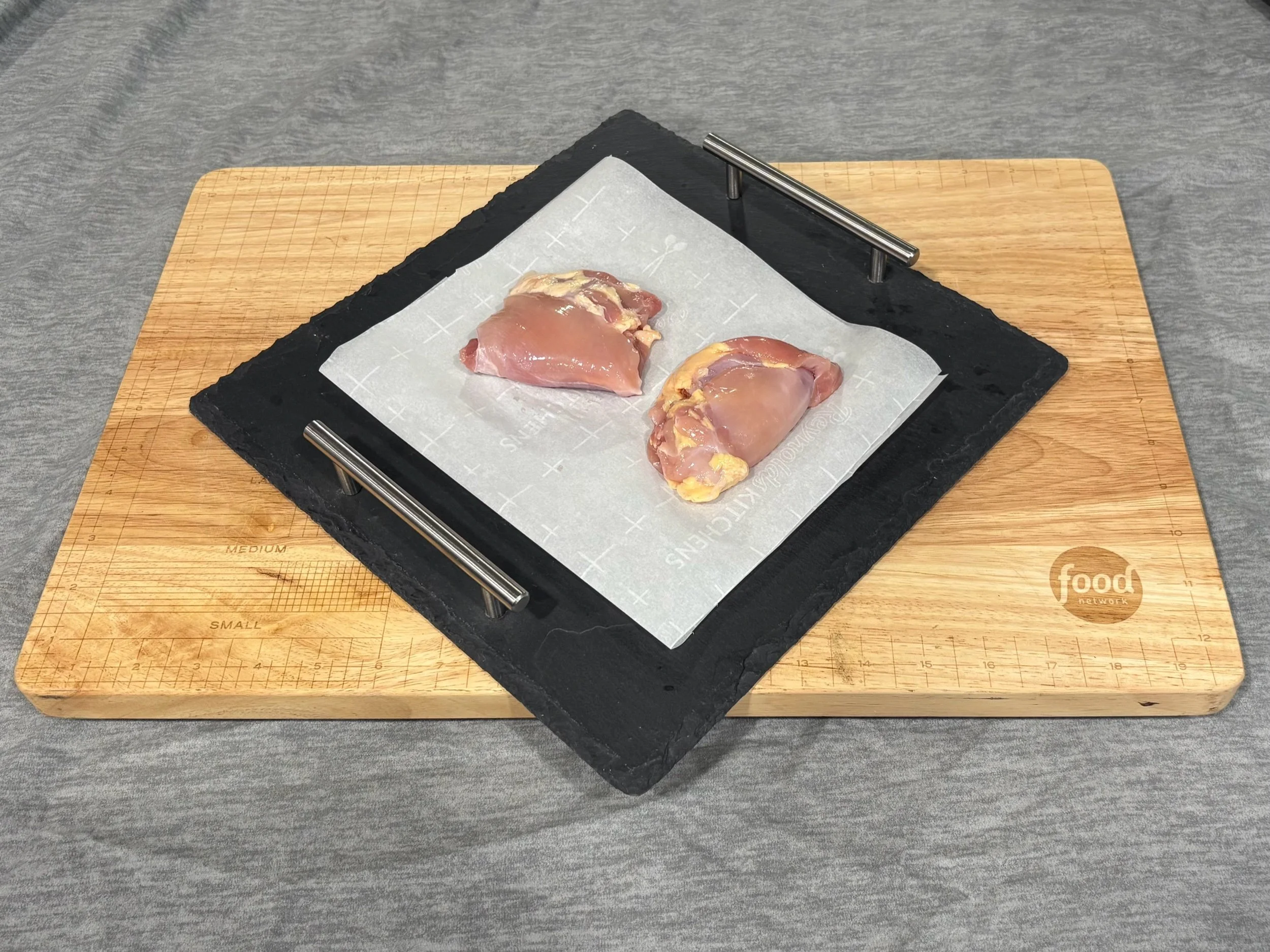
Our bone-in chicken thighs offer rich, full flavor and juicy, tender meat that stands up well to frying, roasting, grilling, and slow cooking. With the skin and bone left on, this cut pairs nicely with a dry rub and patient cooking.
Our birds are grown on rotating pastures, fed with non-GMO grain and all the grass they can forage. We focus on ethical farming practices that prioritize animal welfare and land stewardship, so we can be transparent about how your food is grown — with confidence. The result is clean, flavorful protein you can feel good about feeding your family — raised outside with sunshine and fresh grass... the way it should be done.
A Note on Crispy Skin
Pasture-raised chickens tend to have firmer skin than conventionally raised birds. Because they spend their lives outside—moving, foraging, and building muscle—the skin develops more structure and doesn’t render fat as quickly over high heat, especially on the grill.
For best grilling results, we recommend:
Patting the skin dry before cooking
Cooking low and slow first, then finishing with higher heat
Rendering the skin skin-side down before flipping
Or frying or roasting in the oven, where consistent heat helps the fat render fully
The tradeoff is well worth it: deeper flavor, better texture, and a bird that reflects how it was raised—outside, active, and naturally developed.
Our bone-in chicken thighs offer rich, full flavor and juicy, tender meat that stands up well to frying, roasting, grilling, and slow cooking. With the skin and bone left on, this cut pairs nicely with a dry rub and patient cooking.
Our birds are grown on rotating pastures, fed with non-GMO grain and all the grass they can forage. We focus on ethical farming practices that prioritize animal welfare and land stewardship, so we can be transparent about how your food is grown — with confidence. The result is clean, flavorful protein you can feel good about feeding your family — raised outside with sunshine and fresh grass... the way it should be done.
A Note on Crispy Skin
Pasture-raised chickens tend to have firmer skin than conventionally raised birds. Because they spend their lives outside—moving, foraging, and building muscle—the skin develops more structure and doesn’t render fat as quickly over high heat, especially on the grill.
For best grilling results, we recommend:
Patting the skin dry before cooking
Cooking low and slow first, then finishing with higher heat
Rendering the skin skin-side down before flipping
Or frying or roasting in the oven, where consistent heat helps the fat render fully
The tradeoff is well worth it: deeper flavor, better texture, and a bird that reflects how it was raised—outside, active, and naturally developed.